ACAM Pacific Leads Australia’s Sustainable Aviation Future with First SAF Uplift in Private Charter
A major milestone for Australian aviation
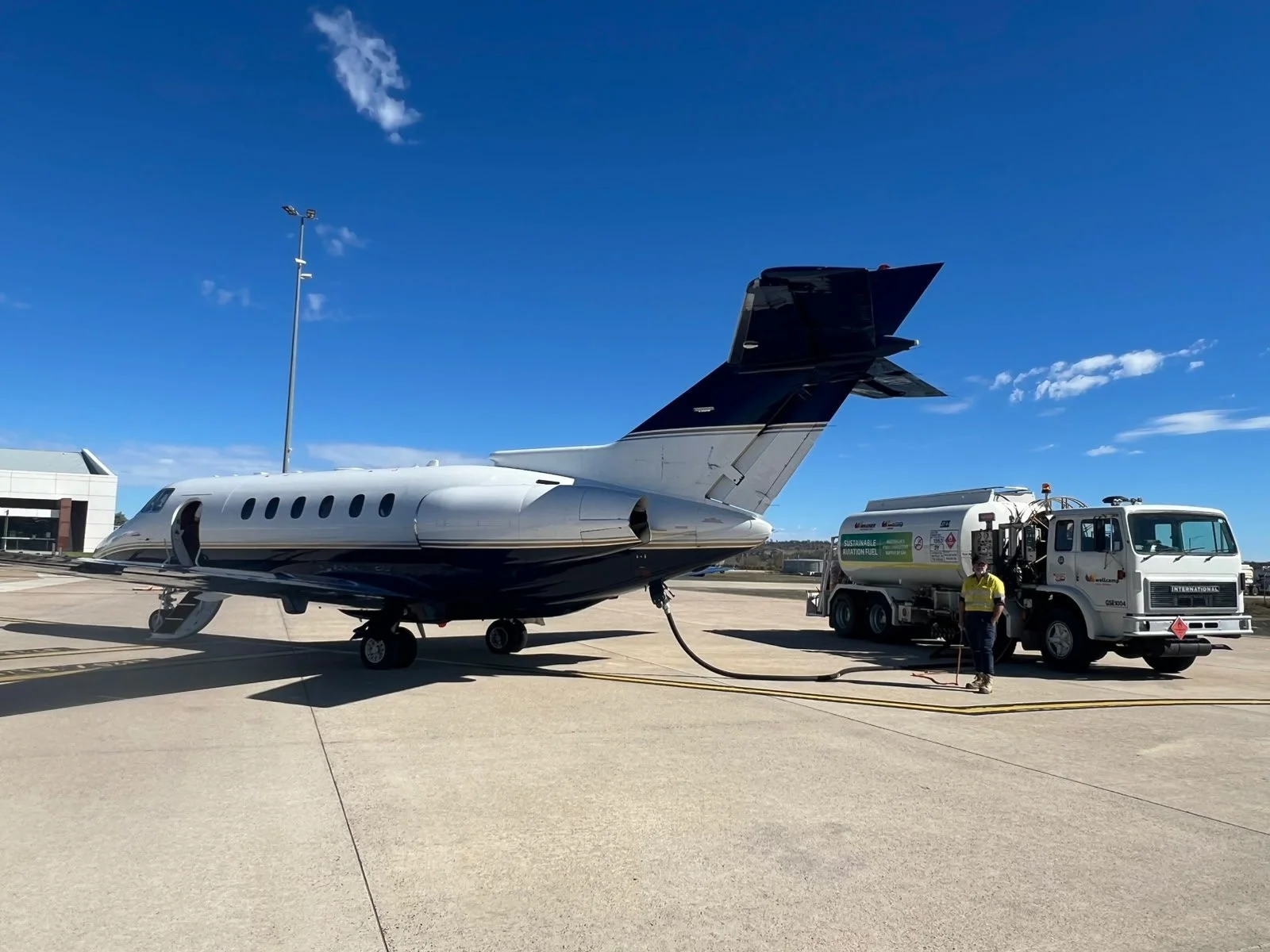
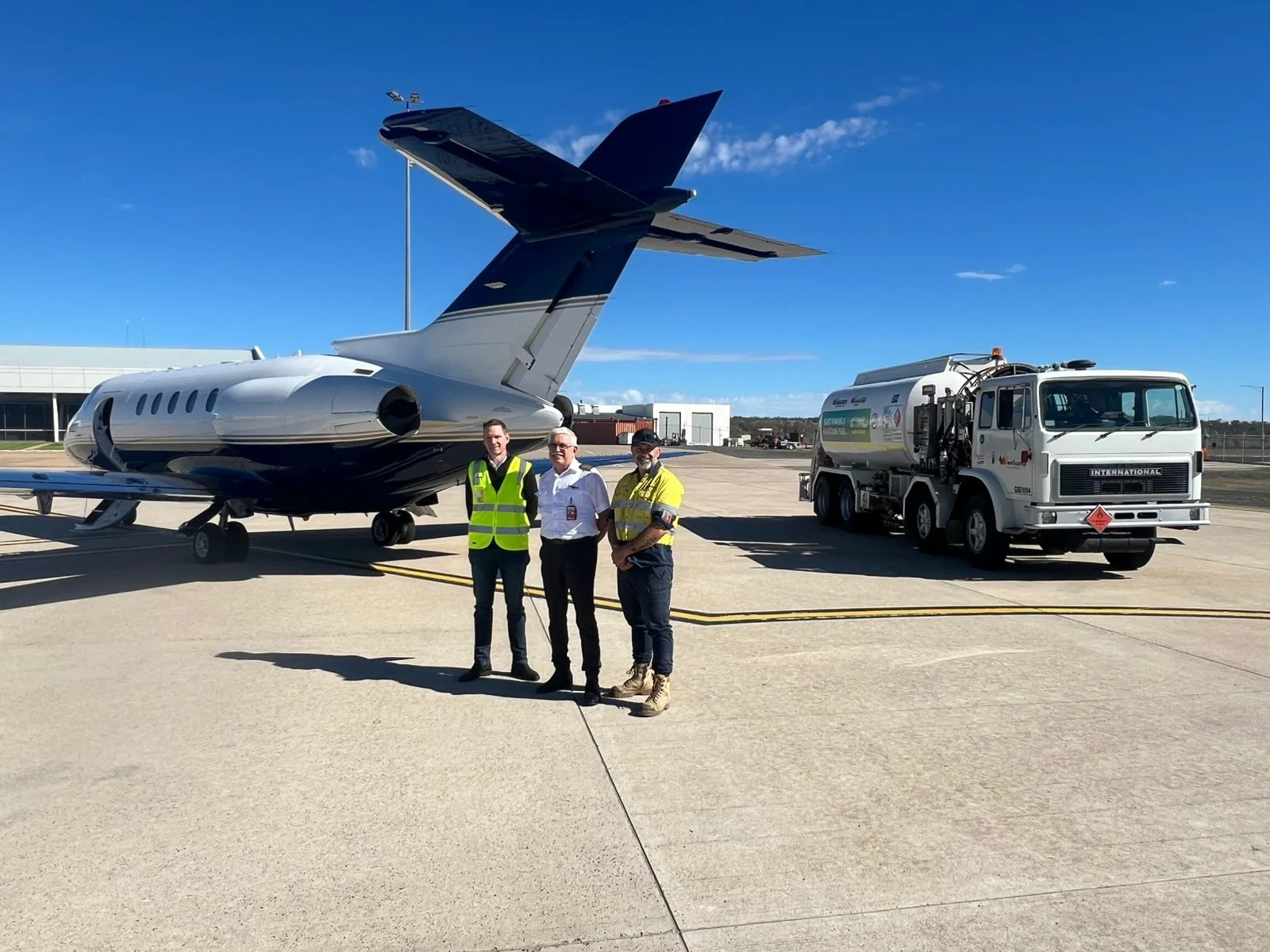
ACAM Pacific has reached a landmark moment in Australian aviation history, becoming the first private jet charter operator in the country to uplift fuel containing Sustainable Aviation Fuel (SAF). This achievement marks a significant step forward not only for the company but for the broader aviation industry in Australia as it transitions toward lower-emissions flight operations.
The uplift took place at Wellcamp Airport, in partnership with Wagner Sustainable Fuels, reinforcing a shared commitment to innovation, sustainability, and practical climate action in aviation. More than a symbolic milestone, this event demonstrates that sustainable aviation is no longer a future concept—it is already operational.
For ACAM Pacific, this moment represents a clear direction: combining premium on-demand charter services with measurable environmental responsibility.
What is Sustainable Aviation Fuel (SAF)?
Sustainable Aviation Fuel, commonly known as SAF, is a next-generation alternative to conventional jet fuel. It is produced from renewable and waste-based feedstocks such as used cooking oil, agricultural residues, and non-food biomass sources.
Unlike traditional fossil-based jet fuel, SAF is designed to significantly reduce lifecycle carbon emissions. Depending on the feedstock and production method, SAF can reduce emissions by up to 80% over its lifecycle compared to conventional aviation fuel.
Importantly, SAF is a “drop-in” fuel, meaning it can be used within existing aircraft engines and airport infrastructure without modification. This makes it one of the most scalable solutions currently available for reducing aviation emissions, particularly in sectors such as private aviation where operational flexibility and performance standards remain critical.
SAF does not eliminate aviation emissions entirely, but it plays a crucial role in reducing the overall carbon footprint of air travel while longer-term technologies such as hydrogen and electric propulsion continue to develop.
Why this SAF uplift matters
The aviation industry is one of the most challenging sectors to decarbonise due to its reliance on energy-dense liquid fuels. While commercial aviation has made incremental progress in efficiency, private aviation has increasingly come under scrutiny for its environmental impact.
ACAM Pacific’s SAF uplift is significant for several reasons:
It is the first recorded SAF uplift by a private jet charter operator in Australia
It demonstrates real-world availability and use of SAF in the Australian market
It proves that sustainable fuel solutions can be integrated into on-demand charter operations today, not just in theory
It supports the development of a broader SAF supply chain within Australia
This milestone moves sustainability from a corporate commitment into operational reality.
The role of Wellcamp Airport and Wagner Sustainable Fuels
The SAF used in this uplift was supplied by Wagner Sustainable Fuels at Wellcamp Airport. This location is strategically important for the development of sustainable aviation in Australia.
Wellcamp Airport is home to Australia’s only SAF blending facility and is recognised as the world’s first SAF production and blending site located directly adjacent to an airport. This unique infrastructure enables streamlined distribution and reduces logistical barriers that have traditionally limited SAF adoption.
By integrating production and aviation operations in one location, Wellcamp provides a model for how regional airports can support the future of low-carbon aviation.
Wagner Sustainable Fuels has played a central role in building this capability, positioning Australia as an emerging participant in the global SAF supply chain.
How SAF is used in private aviation
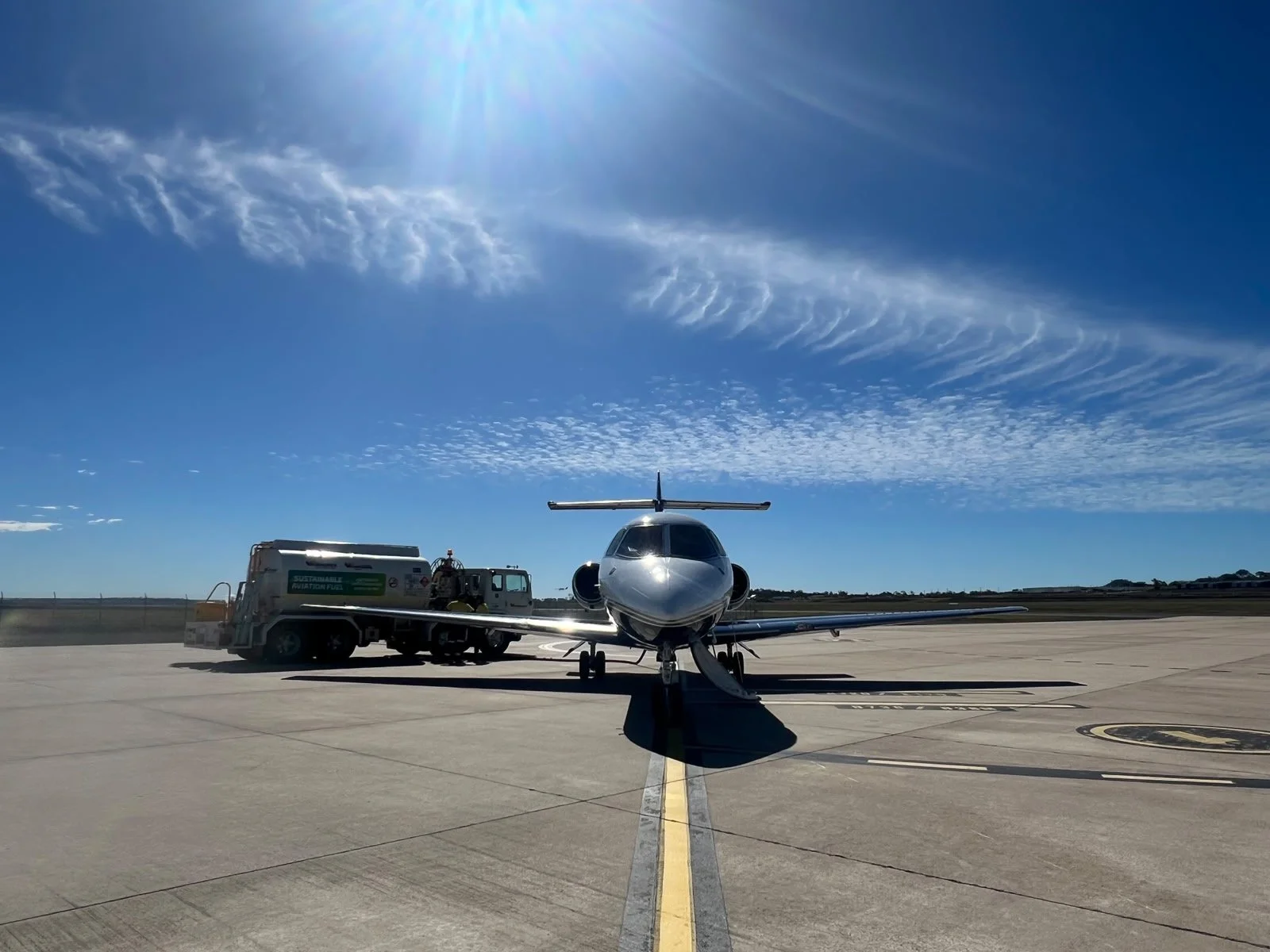
In private charter aviation, flexibility, performance, and safety are essential. SAF is designed to meet these requirements without compromise.
Once produced and blended, SAF is certified to strict international aviation standards and can be mixed with conventional jet fuel in varying ratios. In many cases, SAF is blended with traditional fuel before being delivered to aircraft, ensuring compatibility with existing engines and fueling systems.
For operators like ACAM Pacific, this means SAF can be integrated into existing flight operations without changing aircraft, maintenance procedures, or performance expectations.
This compatibility is critical for scaling adoption across the private aviation sector, where aircraft utilisation and reliability are central to customer experience.
Environmental impact and lifecycle emissions
One of the most important aspects of SAF is its ability to reduce lifecycle carbon emissions. Unlike conventional jet fuel, which releases carbon that has been locked underground for millions of years, SAF is derived from renewable carbon sources that are part of the contemporary carbon cycle.
This means the carbon emitted during combustion has often already been absorbed during the growth phase of the feedstock, resulting in significantly lower net emissions.
While exact reductions depend on production pathways, SAF typically delivers:
Up to 80% reduction in lifecycle greenhouse gas emissions
Lower particulate matter emissions compared to conventional jet fuel
Reduced sulphur content, improving air quality
These benefits make SAF one of the most effective immediate solutions for aviation decarbonisation available today.
ACAM Pacific’s commitment to sustainable aviation
For ACAM Pacific, sustainability is not an add-on—it is becoming a core part of how the business operates and evolves.
The introduction of SAF into charter operations reflects a broader strategy focused on responsible aviation, innovation, and customer choice. This includes giving clients the ability to actively participate in emissions reduction strategies.
Customers now have the option to combine SAF with verified carbon offset programs, enabling carbon-neutral private charter flights across the ACAM Pacific fleet.
This dual approach recognises an important reality: while SAF significantly reduces emissions, it does not yet eliminate them entirely. Carbon offsetting therefore provides an additional mechanism to address remaining emissions while the aviation sector continues to transition.
Carbon neutral private aviation: what it means
Carbon neutral flying means that the emissions associated with a flight are either reduced at the source or balanced through verified environmental projects.
At ACAM Pacific, this can be achieved through:
SAF integration – reducing emissions at the fuel source
Carbon offsetting – investing in accredited environmental projects that remove or prevent equivalent emissions
These projects may include reforestation, renewable energy development, or carbon capture initiatives.
By combining both approaches, ACAM Pacific customers can choose to fly in a way that aligns with modern environmental expectations without compromising on luxury, flexibility, or performance.
The future of SAF in Australia
Australia is still in the early stages of SAF adoption compared to Europe and North America, but momentum is building rapidly. Infrastructure developments such as the Wellcamp SAF facility are critical to accelerating local supply and reducing reliance on imported fuel sources.
As production capacity increases and costs gradually decrease, SAF is expected to play a growing role in both commercial and private aviation sectors.
Key challenges remain, including:
Limited production capacity
Higher cost compared to conventional jet fuel
Feedstock supply constraints
Regulatory and policy support requirements
However, milestones like ACAM Pacific’s SAF uplift demonstrate that practical implementation is already underway.
Driving change through action, not intention
One of the most important messages behind this milestone is that sustainability in aviation is no longer just about long-term goals or carbon targets. It is about operational decisions being made today.
By uplifting SAF fuel in real-world charter operations, ACAM Pacific and Wagner Sustainable Fuels are demonstrating that change is already happening on the ground—and in the air.
This is a shift from intention to action.
A new standard for private aviation in Australia
Private aviation is often viewed through the lens of convenience and exclusivity, but it is increasingly being challenged to align with global sustainability expectations.
ACAM Pacific’s SAF initiative helps redefine what modern private aviation can look like in Australia: efficient, flexible, and environmentally responsible.
By integrating SAF into charter operations and offering carbon-neutral flight options, the company is setting a new benchmark for the industry.